Welcome to the night sky for the next few months. In this article we will cover June, July and August. There will be tips & tricks, constellations, and some celestial events; including an ECLIPSE! So, let’s get into it. Summer can be a bit tricky for stargazing with the longer, brighter days and the shorter nights. The first tip is to leave it later to start looking towards the stars. Around or just after midnight should be the best time to see the night sky.
Constellations
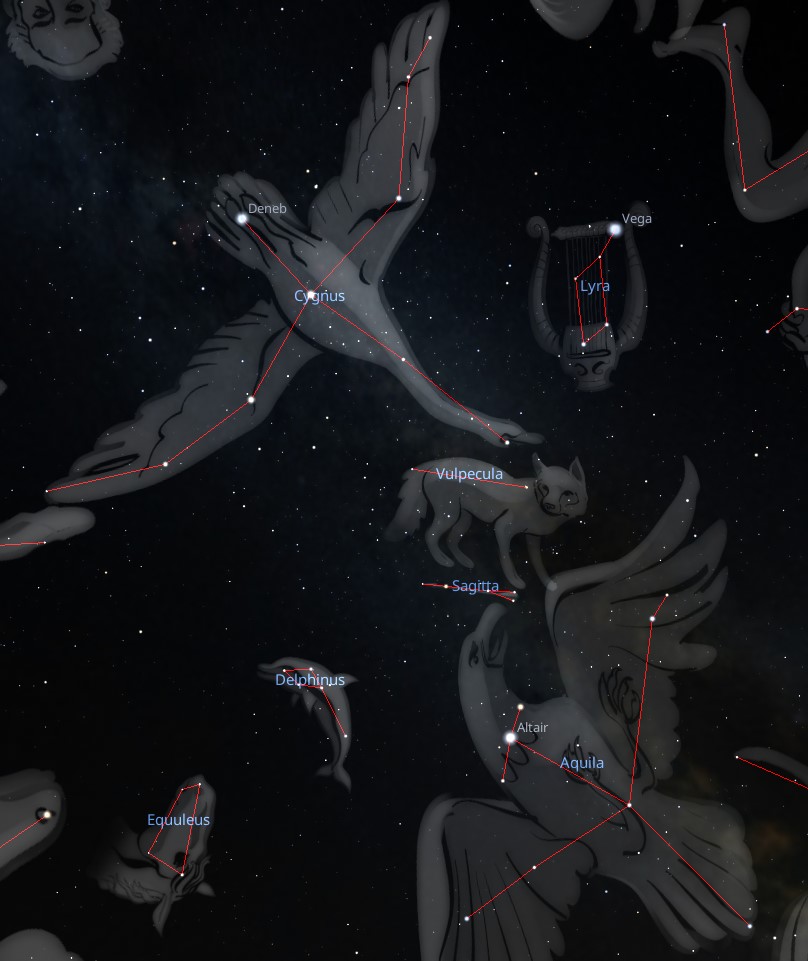
So, we want to look to the stars and spot some patterns in the sky. The first is NOT a constellation, which feels like cheating, but it will help us find 3 constellations. It is called an asterism and named the Summer Triangle. Each star is in a constellation of its own, they are Lyra, Cygnus and Aquila. The triangle itself holds the three brightest stars of the constellations, so it is easily found in the sky. Next to the triangle you might find Hercules, but this one looks less like the Greek legend and more like a squished spider, if you ask me.
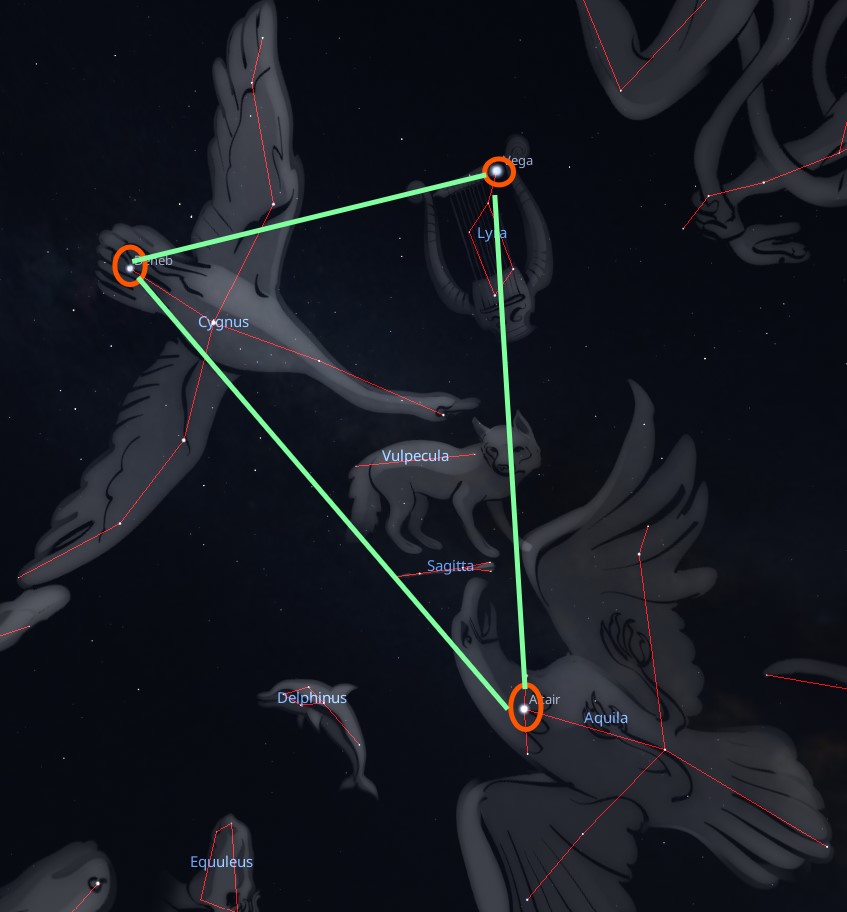
Within the Summer Triangle there is the constellation of Vulpecula, or the Little Fox. A feint little constellation that you might not even notice is there at all. Here you find the location of the first discovery of Pulsar stars, noted by Dame Jocelyn Bell-Burnell back in 1967. They can be found much easier with radio telescopes than the optical kinds of telescopes.
Night sky events
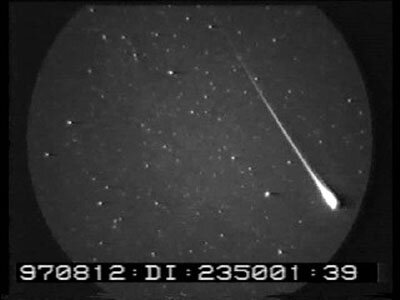
The New Moon for August will happen on the 12th and that will help in watching out for the Perseids at 03:00 on the 13th of August. The Perseids meteor shower is usually a busy one with lots of meteors entering and burning up in the atmosphere. Hopefully, we get clear skies and get to see some fireballs. If you are lucky, with a camera set up at just the right time, you might capture a picture of a streak across the sky on this night.
Eclipse!
Before we get into an eclipse, we have a warning.
Do NOT look at the eclipse with the naked eye.

Image credit: ESA
Now that has been said, we can talk about the total solar eclipse 18:47 on the 12th of August. The best time to see it from Armagh will be at 19:09, that is when the Moon will be covering the largest amount of the sun, as we view it. For safer viewing of the eclipse itself, it is possible to get sun viewers, or specific glasses that reduce the light getting into your eyes. Now why is it happening? The short answer is that the moon is directly between Earth and the Sun, which casts a shadow down on Earth. We have had a few partial eclipses of the moon and sun in recent years, but now a total eclipse. This means that from some places on Earth there will be a perspective that the whole Sun will be blocked out. There will be a wider area that will see the moons shadow dim the daylight to a lesser extent.
From our perspective in Armagh, it will not be total eclipse, only a partial eclipse, but there are places that it will be a total eclipse through parts of Greenland, Iceland, Portugal, Spain and the Mediterranean Sea. Some of our own astronomers will be heading to these locations
During an eclipse of the sun, astronomers and astrophysicists have an opportunity to study the corona around the sun itself. Although, from Armagh we won’t get to see the corona. The atmosphere will be too bright, but within the totality, the corona becomes visible. Of course, these days we have specialised filters and tools that can help us see the sun in a new light, or just a different wavelength.
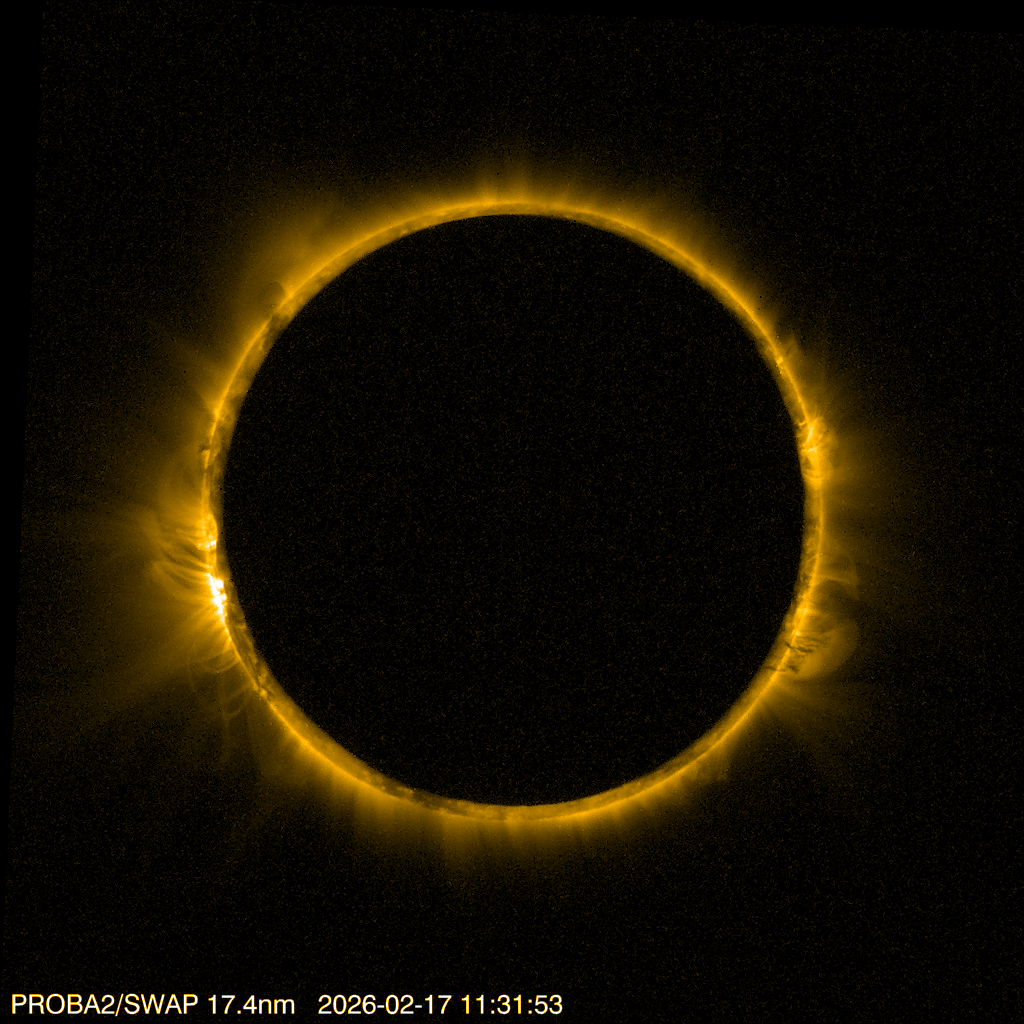
One other question is why or how an eclipse occurs? Well, the moon has an orbit around the Earth and we can track it. We can also track the Suns position in the sky throughout the year; this is a line called the ecliptic. These lines intersect with each other. At the points of intersection are the places in the sky that an eclipse can happen. But timing matters. When the moon crosses the ecliptic and the sun is in a different position, there is no eclipse. The Earth, Moon and Sun must all be in line for an eclipse, if not, the shadow would be cast somewhere else in space and not on Earth.


0 Comments