There’s a point every September when the Universe gives us a gentle nudge and says: “Right, time to get the woolly jumpers out.” That point is the autumn equinox.
This year, the September equinox arrives in the early hours of Wednesday 23 September 2026. While you might not notice anything particularly dramatic happening at 1:05am, it marks an important moment in the astronomical calendar.
So, what actually is an equinox, why does it happen, and why should we care?
So, first things first: what is an equinox?
The word equinox comes from Latin and roughly translates as “equal night”.
There are two equinoxes every year: one in March and one in September. They happen when the centre of the Sun crosses the plane of Earth’s equator.
The September equinox marks the beginning of astronomical autumn in the Northern Hemisphere. But before anyone starts counting hours of daylight with a stopwatch, there’s a slight catch: The equinox doesn’t actually mean we get precisely 12 hours of daylight and 12 hours of darkness.
The exact length of daylight depends on things such as how we define sunrise and sunset. So, the date when daylight and darkness are closest to being equal, known as the equilux, doesn’t necessarily fall on the exact date of the equinox, it is a few days after.
Astronomy sometimes can make things sound so simple and then immediately adds a footnote.
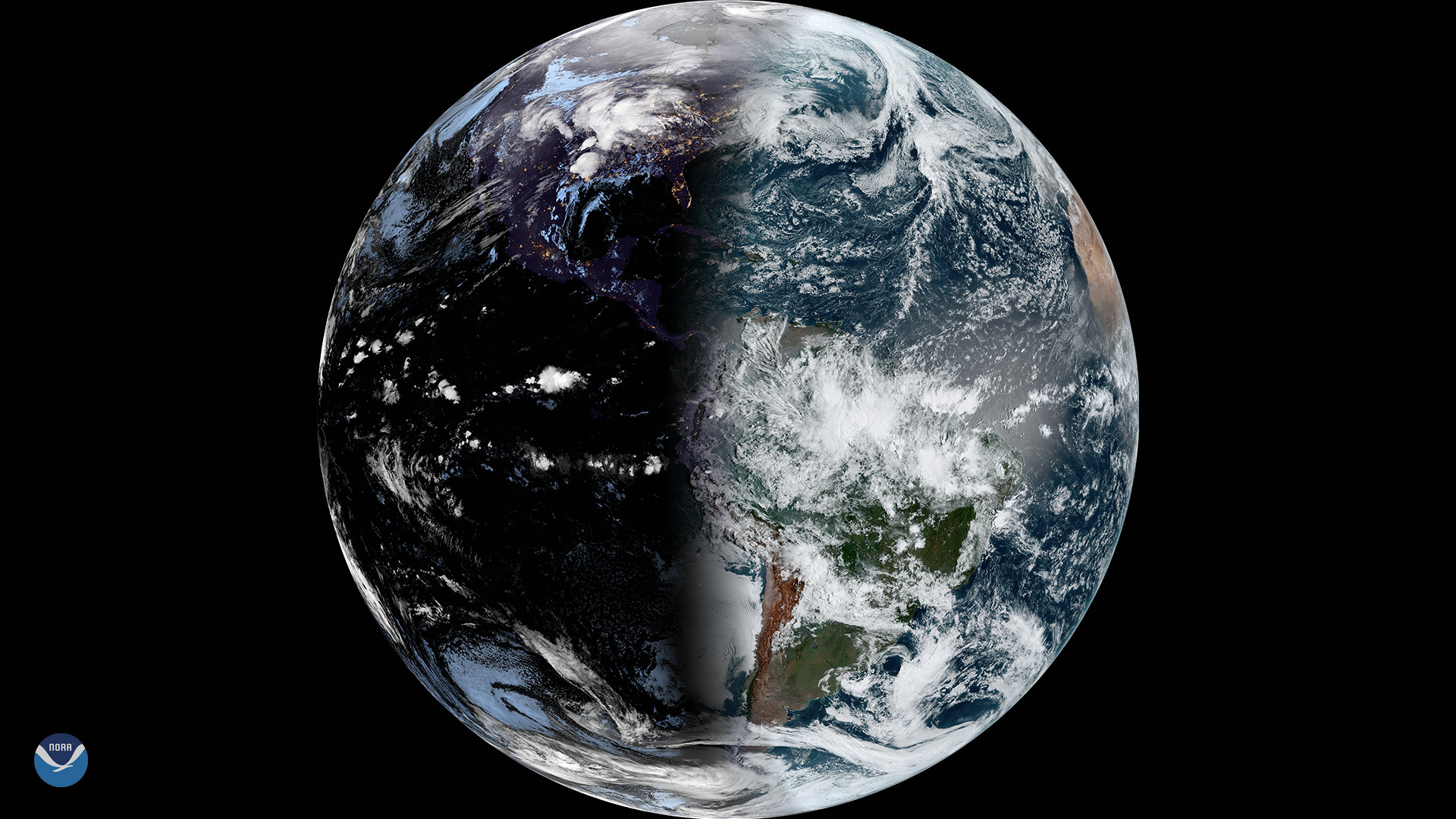
A full disk view of the Earth. Image Credit: NOAA/NASA
So why are the days getting shorter?
This is where Earth’s rather important 23.5-degree tilt comes into play. Our planet isn’t sitting perfectly upright as it travels around the Sun, its axis is tilted. As Earth travels around its orbit, that tilt means different parts of the planet receive different amounts of sunlight at different times of the year.
During our summer, the Northern Hemisphere is tilted towards the Sun. We get longer days, more direct sunlight and, theoretically, more opportunities to complain about how warm the office is.
After the September equinox, the Northern Hemisphere is tilted away from the Sun as Earth continues its journey around its orbit, thus we get shorter days and longer nights.
Is the equinox a very specific moment?
When we say “the equinox is on 23 September”, it sounds as though the entire day is somehow the equinox. That’s not quite the case. The equinox is a precise moment in time and this year, it occurs at around 1:05am BST on Wednesday 23 September.
At that moment, the centre of the Sun crosses the celestial equator, moving from north to south in our sky. And then… that’s it, the Earth carries on doing what it has been doing for approximately 4.5 billion years.
Look where the Sun rises
So here is something you can actually observe: where the Sun rises and sets. Around the equinoxes, the Sun rises roughly due east and sets roughly due west. That gives us a lovely little opportunity to connect the enormous mechanics of our planet with something we can see with our own eyes.
You don’t need a telescope, or a degree in astrophysics. All you need to do is notice where the Sun comes up and where it goes down.
(But please remember: never look directly at the Sun, even during sunrise or sunset, as it can damage your eyes.)
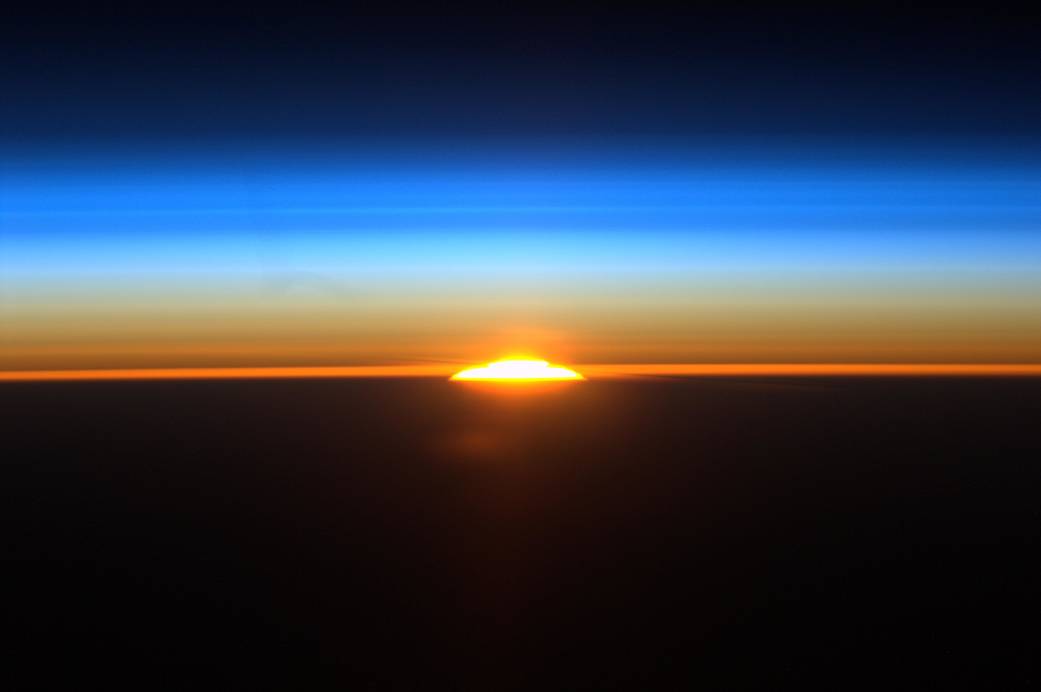
Sunrise Image Credit: NASA
Over the coming months, those positions will gradually shift along the horizon. By the time we reach the winter solstice, the Sun will be rising and setting much further south. So the sky is basically giving us a giant, slow-moving calendar!
The changing position of the Sun helped people throughout history understand the seasons and organise life around them. When should crops be planted? When should they be harvested? When would the days begin to shorten? When would winter arrive?
The sky was, quite literally, a calendar. Although we now have incredibly precise astronomical calculations, satellites and computers to tell us exactly what’s happening, there’s still something wonderfully simple about standing outside and noticing the Sun’s position for yourself. I think that’s one of the nicest things about the equinox and you don’t have to understand everything about orbital mechanics to appreciate it. You can simply step outside, notice that the evenings are getting darker, notice that the mornings feel different and then, if you get curious, start asking questions.
So, happy equinox!


0 Comments