July Night Sky
Summer’s here! The weather’s heating up and skies will hopefully be clear for a bit of stargazing! There are lots of interesting sights in the sky this July, so while you may have to wait longer for it to get Read more
This week our Astronomy & You series takes a look at Electronic Imaging Detectors and their effect on our lives. This piece was written by Ana I. Gomez de Castro. Ana is a full professor in Astronomy and Astrophysics and Read more
This week’s edition of our Astronomy & You series is a piece on the applications of Magnetic Resonance Imaging (MRI) to our everyday lives. The following piece was written by Gabriele Giovannini; vice-President of the IAU’s Division B and full Read more
Its June and school is nearly out. The summer holidays are fast approaching and whether you are planning a holiday home or abroad there will so many interesting objects to observe in the June Night sky; let’s just hope the Read more
Continuing our weekly instalments outlining astronomy’s impact on your everyday life, we have an article by Jan Mathijs van der Hulst. Thijs is an astronomer, Professor of Radio Astronomy at the University of Groningen, and member of the IAU’s Division Read more
To follow on from last week’s post on grid computing in our series on the technological applications of astronomy to society we have an article on spectroscopy and the discovery of a new element in the cosmos – helium – Read more
Armagh Observatory & Planetarium welcomes DfC Permanent Secretary Tracy Meharg The Armagh Observatory & Planetarium welcomed Tracy Meharg, Permanent Secretary at the Department for Communities, (DfC) on Wednesday 22nd May to update her on ambitious future plans and current programmes. Read more
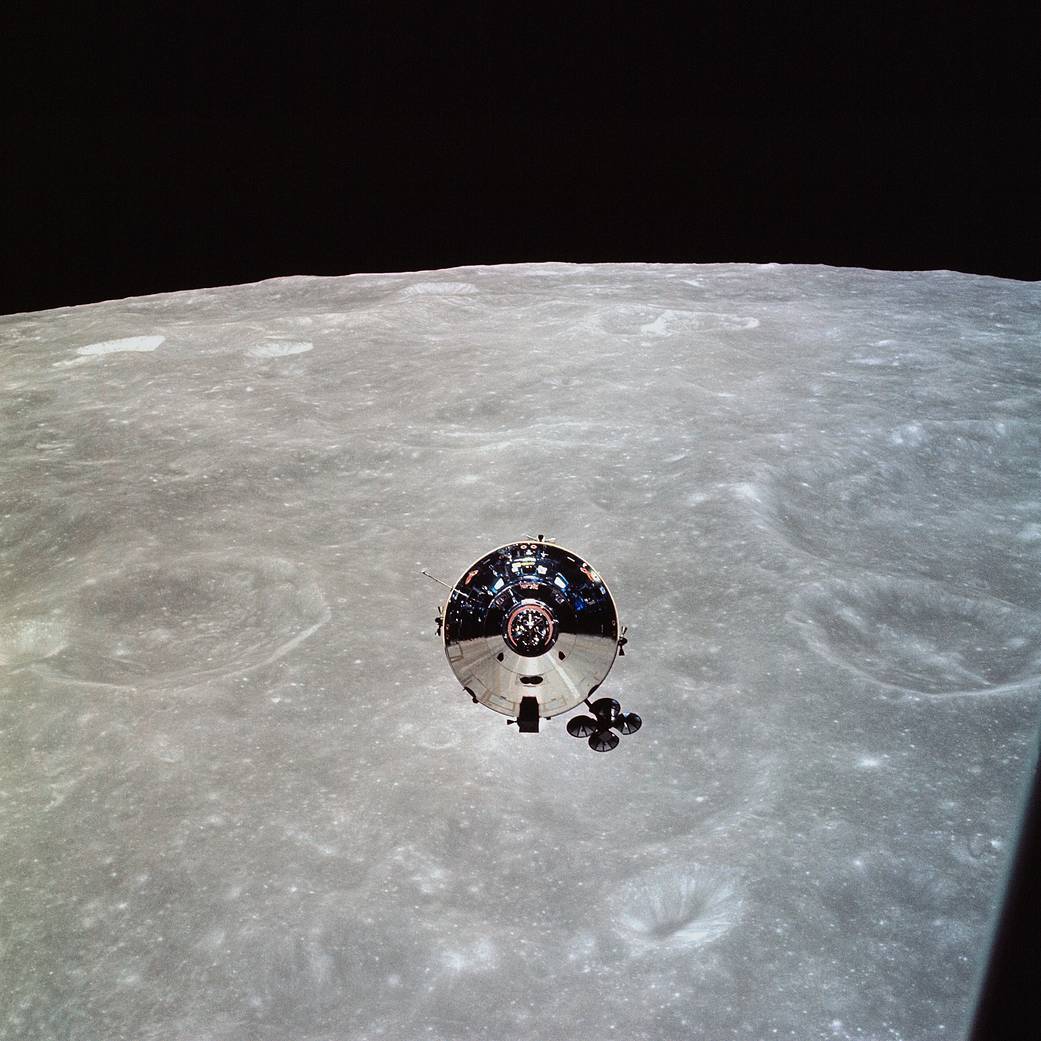
Apollo 10 was the mission that almost made it to the Moon. Designed as the full dress rehearsal for Apollo 11, the lunar module “Snoopy” approached to just under 15 km from the Moon’s surface with astronauts Thomas Stafford and Read more
Continuing our weekly series on the application of astronomy to technology, we have an piece written by Dmitrij Bisikalo; Professor at The Russian Academy of Sciences’ Institute of Astronomy and the President of the International Astronomical Union’s Commission B1 on Read more
As part of Museum Week 2019, some of the staff from Armagh Observatory and Planetarium have written a few words about which women in STEM inspire them particularly. Katherine Johnson by Helen McLoughlin With the excitement surrounding the 50th Anniversary Read more
This week’s instalment of the Technical Applications of Astronomy to Society features a piece written by Professor Antonio Mario Magalhaes; astronomer, IAU member and Full Professor at the Instituto de Astronomia, Geofisica e Ciencias Atmosfericas of the University of São Read more
There’s lots to look forward to in the Month of May: the evenings are brighter, there’s the promise of good weather and most importantly – not one, but two bank holiday weekends! There’s also lots to look forward to and Read more
To kick off our new weekly series on the Technical Applications of Astronomy to Society, inspired by a recent publication of the IAU (The International Astronomical Union), our Director Michael Burton has written a brief summary of the history and Read more
While you may be familiar with black holes from sci-fi and many artists’ renditions of the phenomenon, our first actual view of the event horizon of the supermassive black hole which is at the centre of a neighbouring galaxy, Messier Read more
In celebration of the 50th Anniversary of The Bovedy Meteorite falling in Northern Ireland on Friday 25th April 1969, Artist Noel Connor has compiled some thoughts and reflections on his experience with Bovedy. The sky always seemed low over our Read more
To celebrate the 50th Anniversary of The Bovedy Meteorite falling in Northern Ireland, some of The Education Team at Armagh Observatory and Planetarium have written pieces about their favourite meteorites and craters from across the globe. The Mysterious Mbozi by Read more
Looking up at the wonders of the night sky is an amazing pastime, and whether you use a telescope or binoculars all you really need is the naked eye, but remember to give your eyes at least 20 minutes to Read more
Article by Armagh Astronomer Tolis Christou Imagine being outdoors on a sunny day, following the Sun as it rises from the east, heading towards the south and then on towards the west where it sets. Now think back: when did Read more
Satellites, our lives wouldn’t be complete without them. Since the beginning of the Space Race, Satellites have become a major part of how we observe our Solar System and the Universe, and also keep a close eye on our own planet.
How is it March already? 2019 has just flown in! Although we have had a mild winter, we can start to wave goodbye to the dark evenings and say hello to Spring as the date that I have been longing for ever since the evenings got shorter – the Spring Equinox on the 20th March fast approaches.
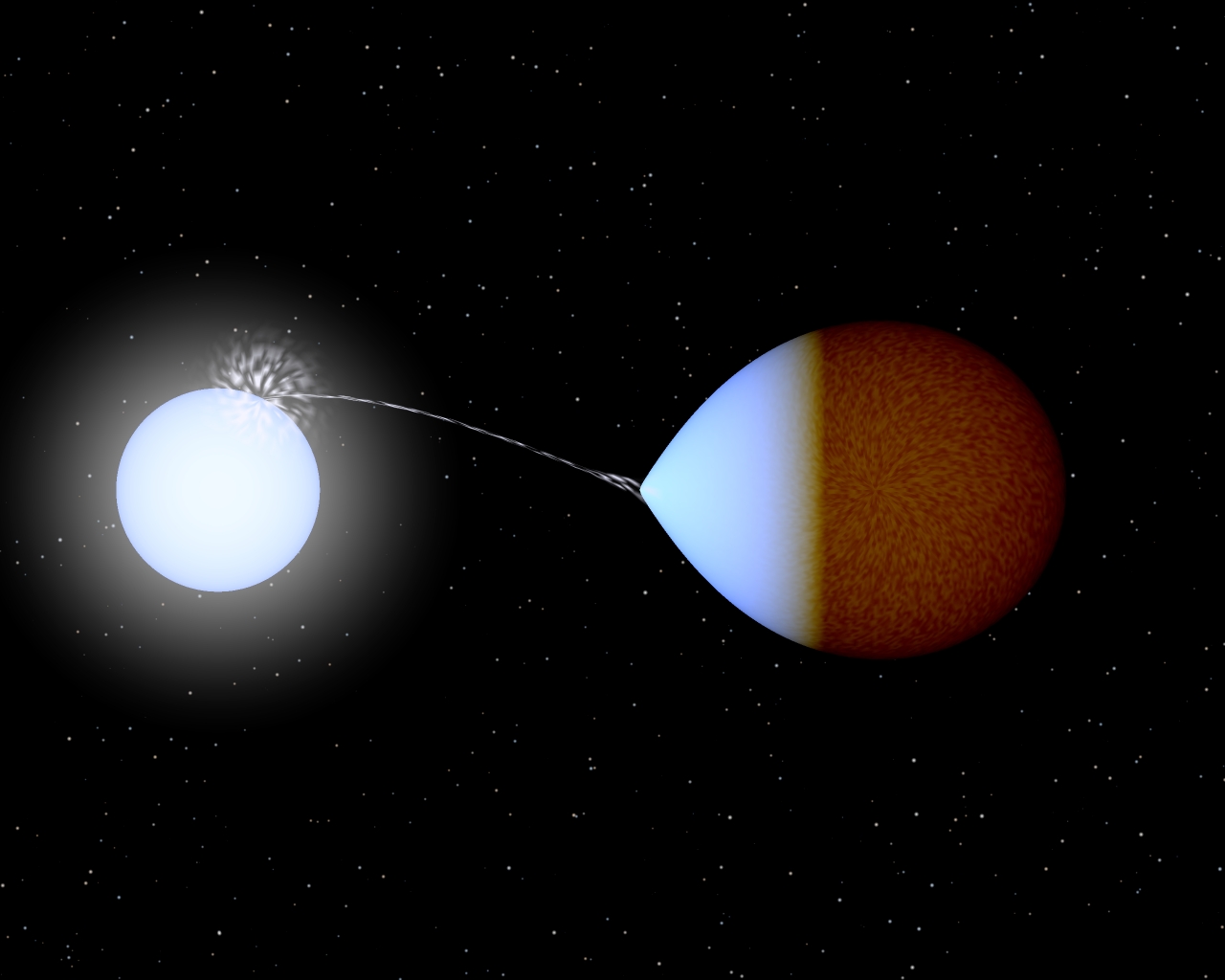
Article by: Gavin Ramsay Unlike our Sun, around half of all stars have another stellar companion. The closest stars to the Sun are two bright southern stars, alpha Centauri A and B, which orbit each other every 80 years and Read more
Before addressing Black Hole sizes, we should first go back to see what astronomers mean when they use the term “Black Hole”. This may be easiest to understand when considering the end products of stars.
The hottest February day ever in Armagh.
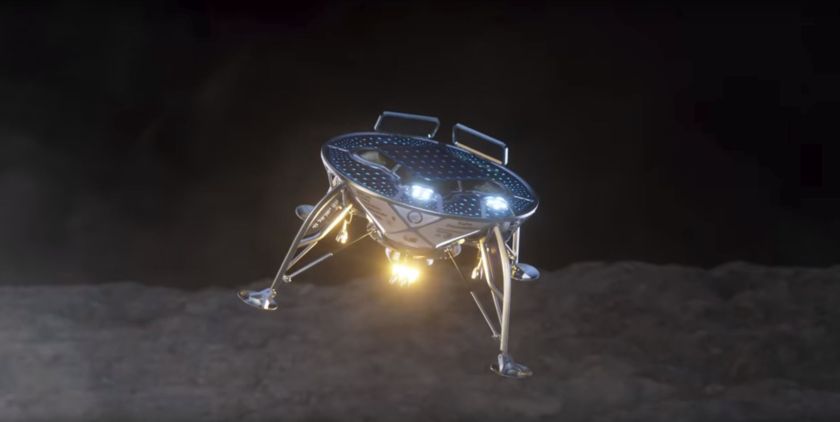
Next week, all being well a Falcon 9 rocket will take off from Cape Canaveral in Florida carrying a very special payload: a spacecraft built by a Tel Aviv-based company aiming to be the first privately-funded mission to land on Read more
Finally, we have left the January blues behind us, the month that never seems to end and it is now time for February fun! The chill in the air has well and truly settled in and it looks like it will be staying with us for a while yet.
In a nutshell, comets are small bodies of ice and dust in orbit around the Sun. When they pass near the sun, they start to vaporize creating long tails of dust and gas. Even this small amount of information makes us ask so many questions about these members of our solar system.
Michael Burton, Director of the Armagh Observatory and Planaterium Monday January 21, 2019 – the last chance to watch a total eclipse of the Moon from Armagh for over a decade. Should we hold a special viewing session to give Read more
Article written by: Heather Alexander, Education officer At the Armagh Observatory and Planetarium we have been having a look at all the things that are going to happen throughout the year and trying to select some of the events that Read more
21st January 2019, sky-watchers will witness a rare total eclipse of the Moon. This will be the last opportunity to view a total lunar eclipse from the British Isles for three-and-a-half years, until 16 May 2022.
Our view of the cosmos is biased by the vista that is apparent to our eyes. This is what the view in what we call the optically visible portion of the spectrum. To the unaided eye it is a view of a universe full of stars, together with five planets, one Moon and of course the Sun. When augmented with a telescope, our eyes can then see a universe full of galaxies – giant cities of stars.
Article written by: Helen McLoughlin, Education Officer Let’s face it, New Year’s Resolutions like ‘I’m going to the gym three times a week’ or ‘I’m going on a diet’ are all well and good but fizzle out after a week Read more
Here we are, on the count down to Christmas, and we’re having a look at all the Astronotes that have been written for our blog this year. We’ve had input not just from the Education Team this year, but also the Academic Staff of the Armagh Observatory and Planetarium.
Christmas Eve of 1968 saw the arrival of the first humans at the Moon – the crew of Apollo 8. A truly momentous event in history, the arrival of humans to another world for the very first time.
The rapidly-approaching 2019 will let us mark a half-century since human beings took the first steps on a body other than the Earth, namely our own Moon. But, come the New Year, lunar exploration is likely to make the headlines for one other reason: a number of robotic spacecraft built by three different nations will attempt to repeat the feat accomplished by the Apollo programme and land on the Moon’s surface.
The long cold dark nights have well and truly settled in, and now that it’s December it’s officially acceptable to say the C word. Christmas, Christmas is coming! And so is Santa Claus! Decorations are going up, there’s mad panic to buy Christmas presents and families are organising who’s having dinner and where. Ahh I love this time of year.
With Space Exploration comes theories and conspiracies. In our latest blog we debunk some of the more infamous ones.
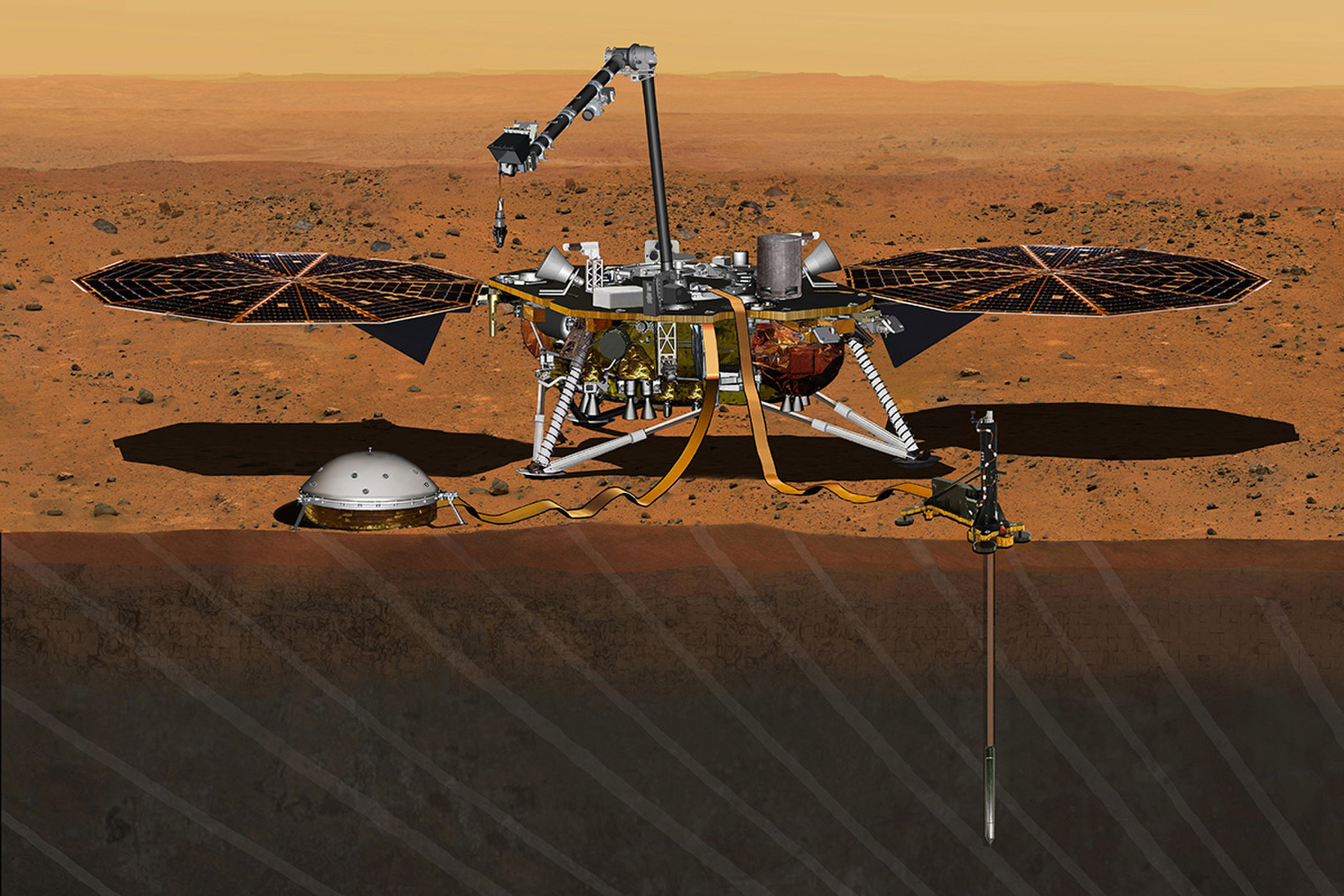
Some seven months ago, a NASA spacecraft called InSight was launched atop an Atlas 5 rocket and headed to Mars (Figure 1). If all goes well, the spacecraft will land on the Martian surface at around 8pm UK time this Monday 26th November and begin its science investigation. InSight is a fixed lander (see Figure 2 below), a much simpler affair than the Curiosity rover that arrived in 2012 and continues its trek across the floor of Gale crater to this day. Mobility, is however, not required for the specific aim of the mission.
NASA has announced the retirement of the Kepler spacecraft. After launch in March 2009, it began a continuous observation of a 115 square degree field of view (the diameter of the moon is 1/2 a degree) between the constellations Cygnus and Lyra.
October is over and the nights are drawing in. Instead of lamenting the fact that we are driving to and from work in the dark, let’s think of the positives – more time to stargaze! And there’s plenty of interesting objects and constellations to look out for in November.
As had been reported on in an earlier Astronotes blog article, the International Astronomical Union was putting to the vote whether to change the name of the law relating to the expansion of the universe. Of the 11,000 professional astronomers Read more
An interview with resident PhD Student Rok Nezic about his recent adventure to the European Planetary Science Congress 2018, held in Berlin, Germany.
As an earlier Astronotes article reported on, during its XXX General Assembly in Vienna, held in August 2018, the International Astronomical Union (IAU) put forward a draft resolution to rename the Hubble law as the “Hubble–Lemaître law”. The resolution was proposed to recognise Lemaître’s research on the expansion of the Universe, and to pay tribute to both Lemaître and Hubble for their fundamental contributions to the development of modern cosmology.
The discovery of planets orbiting around other stars has been one of humankinds greatest achievements. The existance of these ‘exo-planets’ can challenge our perception of our place in the universe. Since the first confirmed detection of a planet around another normal star (51 Peg) in 1995, many thousands of planets have been discovered. Indeed, it is likely that most stars will have their own system of planets. It is important in answering the question – is there intelligent life out there?
October is here! It is one of our favourite months as there is so much more to see in the sky and the nights are getting deliciously darker. One thing to remember when you are stargazing is to wrap up warm when you venture outside. The nights are getting much colder, and with some of the best stargazing occurring in the early hours of the morning, we don’t want anyone catching a chill. Thermals and a thermos filled with hot chocolate or coffee will do the trick. Also don’t forget that we will be starting our Star Tracker evenings in the coming months!
The Daniel K. Inouye Solar Telescope (DKIST) is under construction on the summit of Haleakalā on Maui, Hawaii. Since DKIST will be observing the Sun’s corona, the sky above the telescope needs to be as free of dust, aerosols and pollutants. The isolated islands of Hawaii provide optimal conditions for clear, “coronal skies”.
Have you ever wondered what is it like to live in space? How you put things down when there’s no ‘up’ or ‘down’? How do you sleep when nothing holds you to your bed? How you wash your face when the water does not behave normally? Here are some interesting facts about life in space.
Have you ever been worried about the impact of an asteroid wiping out human life? Well, I have some disturbing news for you: there is another possibility involving the explosion of a massive star that gives rise to a gamma-ray burst (called by astronomers simply a GRB), when the star ends its life producing a black hole.
After a special vote in the IAu General Assembly, we interview Armagh Observatory and Planetarium Director. Professor MIchael Burton, on the renaming of the Hubble Law.
This September is a relatively uneventful month (astronomy-wise). Few visible planets, quiet Sun and overall a very poor month for meteor showers.
Space is forever changing. Here is a list of 10 things we used to believe about Space.
The Armagh Observatory has been a staple feature along the Armagh skyline since its creation in 1790. Astronomical research has been undertaken within the organisation since the 1790s and to this day it has seen several different Directors and numerous astronomers walk through its historical doors.
September 2018 will see over 50 astronomers from around the world gather at the Armagh Observatory and Planetarium to discuss the latest news about hydrogen-deficient stars. These stars have lost nearly all the hydrogen from which they were made, to leave only nuclear ash. Astronomers want to learn how these rare and short-lived remnants formed, and what drives their spectacular changes in brightness.
July 4, 2018 saw the 150th birthday of Henrietta Swan Leavitt (1868 – 1921), one of the most important astronomers of the 20th century. Born in Lancaster, Massachusetts, Leavitt graduated from Radfcliffe College, Harvard, in 1892. She then stayed on at the Harvard College Observatory as a volunteer research assistant. Whilst attempting a graduate degree in astronomy and travelling in Europe, she became ill with grave consequences for her hearing. In 1902, then director, Edward Pickering, invited Henrietta to join the permanent staff at Harvard, where she was assigned to study “variable” stars.
Armagh Observatory, 3rd August 2018: Armagh Observatory reports that July 2018 was much warmer and sunnier than average, with only slightly less than average total rainfall. The mean temperature was 17.0 degrees Celsius (62.6 Fahrenheit), approximately 2.2 C warmer than the long-term (1796–2010) average July temperature at Armagh and 1.2 C warmer than the most recent (1981–2010) 30- year average. This was the warmest July at Armagh for five years. The warmest day (highest maximum air temperature) was 27.1 C, which occurred on the 4th, followed by 26.7 C on the 22nd. Both these maxima wereslightly more than 80 degrees Fahrenheit. The coldest day (lowest maximum air temperature) was 14.4 C on the 11th. The coolest night (lowest minimum air
temperature) was 7.6 C on the 10th, and the warmest night (highest minimum air temperature) was 16.6 C on the 27th followed closely by 16.5 C on the 23rd. The minimum grass temperature was 0.3 C on the 10th, so there were no ground or air frosts.
During the summer every year, we observe the International Asteroid Day (“Asteroid Day” for short) on 30th June. The United Nations has proclaimed it will be observed globally on that date “to raise awareness about asteroids and what can be done to protect the Earth, its families, communities, and future generations from a catastrophic event.”
While their topics certainly have some overlap, the date for the Asteroid Day was not chosen in acknowledgment of the film Armageddon (which was released on 1st July 1998), but to commemorate a much more real and to this day somewhat mysterious occurrence: the Tunguska event (which would also make a good movie title!). This summer marks the 110th anniversary of what is believed to be the largest impact event on Earth in recorded history.
It’s the beginning of a new month, filled with new exciting events in the night sky. Here is a brief summary of what to expect in the next few weeks.
Astronomers now know many hundreds of planets orbiting other stars in our Galaxy. These show an incredible amount of diversity in their basic properties such as size and temperature with no two planets being quite the same. But the Earth is still unique among planets within or outside our solar system in its ability to support life
The Armagh Observatory and Planetarium are holding a special event to mark the lunar eclipse, coming at almost the same time as the opposition of Mars. The event has proved so popular that tickets sold out within a couple of hours of being released, so we have written this blog entry to tell you about what will happen if you missed out on obtaining a ticket or are going to try to observe the eclipse from elsewhere.
July 20 1969 saw, arguably, the most famous event in all of human history when Neil Armstrong stepped onto the surface of the Moon and left his footprints there – a mark still indelibly framed in the lunar dust today, some 49 years later. It may seem almost as incredible that it is indeed nearly half a century ago that this epochal event occurred, one that united all of humanity for a short while, as we stared at that yellow orb in our night skies to know that one of our species was walking on it surface.
Space is always changing. New things are discovered frequently, and the latest discovery was made inside our own solar system. Jupiter, the largest planet in our solar system, now has a staggering 79 moons in its orbit. Compare this to Earth’s lonely, singular moon and this shows you just how monstrous the gas giant planet is in size.
This article has been inspired by the many questions we get asked here at the Armagh Observatory and Planetarium. We love being asked questions but we thought it would be funny to have a look at the questions you really should never ask an Astronomer. We hope this gives you a bit of a laugh!
This July will be a very astronomically eventful month – full of eclipses, bright planets, meteor showers and bright satellite passes. If the weather permits, we will have the opportunity to witness a lot of interesting events in the night sky.
Where do meteorites come from? This question has been occupying the scientific community ever since it was realised that these “rocks from the sky” are, in fact, pieces of other worlds arriving on our planet from deep space. New research Read more
This summer experience our world and beyond as you sit back and relax in the Planetarium’s 360-degree dome theatre. With six different shows running Monday-Saturday throughout July and August there is so much to choose from, including a brand new film.
Approximately every other star in the Milky Way galaxy is in a ‘binary’ system. These binaries are made up of two stars orbiting around a common centre of gravity. The time taken for the stars in the binary to make one revolution is called the ‘orbital period’. Binaries have a wide range of orbital period. The closest stellar system to the Sun is alpha Centauri which has two stars not unlike our Sun orbiting around one another every 80 years. A third member of the system, Proxima Centauri, which is much smaller red dwarf star, orbits around these two stars once every 10,000 years.
Article by Michael Burton, Director of the Armagh Observatory and Planetarium NASA’s Curiosity Mars rover recently discovered organic molecules in 3 billion year old Martian rocks. This material may have been delivered by meteorites and comets to the young planet. Read more
Article by Jorick Vink , Astronomer at the Armagh Observatory and Planetarium When you are fortunate enough to have a clear view of the night sky, and you start wondering about the properties of all these sources of light, you Read more
Article by: Tom Watts In collaboration with universities in England, Australia and Thailand, the Armagh Observatory and Planetarium is part of a team operating and commissioning the new Gravitational wave Optical Transient Observatory (GOTO) at the Roque de los Muchachos Read more
Article by: Holly Preece, PhD student at the Armagh Observatory and Planetarium NASA’s Hubble space telescope was launched on 24th April 1990. It was the first optical space telescope to be launched into orbit and has been one of the Read more
Article by: Yanina Metodieva, PhD student at the Armagh Observatory and Planetarium March has certainly been an eventful month, and now we’re in to April. The Spring has definitely sprung and we’re enjoying the stretch in the evenings, even if Read more
The Observatory and Planetarium has welcomed school students to visit for work experience. A previous Astronote described our work with the Faulkes Telescope Project. Below is an account written by three of our work experience students in 2018 March, based on the work done at Armagh Observatory and Planetarium by them and three other students.
Article by Aaron Golden, Visiting Astronomer at the Armagh Observatory and Planetarium Stephen Bourke works at the Department of Space, Earth and Environment, Onsala Space Observatory in Sweden, and Aaron Golden at the School of Maths in NUI Galway, and Read more
No one undertakes research in physics with the intention of winning a prize. It is the joy of discovering something no one knew before. – Professor Stephen Hawking Today, 14th March 2018, marks a very sad day in the Read more
Article written by: Conor Byrne As an astrophysicist with a keen interest in space from a young age, the opportunity to witness a rare astronomical phenomenon is naturally quite high on the ‘bucket list’. So when I was attending a Read more
Article written by: Professor Michael Burton, Director of Armagh Observatory and Planetarium The city of Armagh lays claim to a remarkable history that belies its small size. A history stretching from the neolithic era, and the mythology of Emain Macha Read more
Article written by: Phil Hall Two weeks ago, a space-suited mannequin was strapped inside a cherry red car, the car was strapped inside a rocket, and the whole lot was launched into space. Although the shiny convertible might be the Read more
Article Written by Gavin Ramsay Comets have been known for millennia with Halley’s Comet famously being shown in the Bayeux Tapestry illustrating events which took place in 1066. They were also thought to foretell catastrophic events. Today we know them Read more
Article written by: Heather Alexander Have you ever had a fun night out with friends, or a lazy day in with loved ones, or even just strolled down the street, and asked the question “Who discovered…?” I am the type Read more
Recent observations of the helium star HD144941 have been obtained from space. Armagh astronomers Professor Simon Jeffery and Dr Gavin Ramsay have discovered that they show a light curve best explained by darker and lighter patches on the star’s surface Read more
Well, thankfully the drudgery of January is behind us and we can look forward to a month full of dark nights, stars and even a hint of romance. And let me tell you this my dear reader, if there’s one Read more
Since the beginning of the space age, humanity has been sending robotic emissaries to all corners of the solar system. These represent some of the most complex technological undertakings ever conceived. Travelling for years and even decades to their destinations, Read more
Some good news folks! If you fancy a few free ‘sparklers’ to get you celebrating, you could fill a bag with the number of fabulous looking stars that will appear their prettiest again this month against the darkest seasonal drape Read more
Star Wars, the very name brings up images of childhoods spent in front of a TV or cinema screen, absorbing up stories of a galaxy far, far away. For many, it was the thing to ignite their passion for storytelling, Read more
Hello again Planetarichums! It’s Stephen here, ready to do my very best to explain some of the upcoming wonders in our night sky as we head into winter and the Christmas holidays. So, first things first, we’ll talk a little Read more
Comets are small icy and rocky objects flying around our Solar System on elliptical orbits, as opposed to near-circular ones the planets are enjoying. They are strange and fantastic enough as it is: bright comets with their tails spanning across Read more
In a paper entitled ‘GALEX J184559.8−413827: a new extreme helium star identified using SALT’, Armagh astronomer Simon Jeffery reports the first new extreme helium star to be discovered in nearly 40 years. Extreme helium stars represent a small group of Read more
After telling us about the Sun, in part two of this posting Armagh astronomer Gerry Doyle takes us through the telescopes and satellites being used to study the Sun. The Solar Physics community needs continued access to state-of-the-art observational facilities (both space- Read more
October is over, and November is now upon us. The days are definitely getting colder, the night are definitely longer, which means the time for gazing into the night sky is now! One of the best things about November is Read more
Armagh Observatory and Planetarium’s Robinson Lecture this year will be about the Sun. To lead into this here is the first of two articles about why astronomers study our Sun, and the range of telescopes and satellites co-opted to the Read more
The 2018 Robinson Lecture will be given by Professor Louise Harra of University College London. Her topic is about the Solar Orbiter, a new spacecraft to be launched to study the Sun. It will be held in the Archbishop’s Palace Read more
On October 31, 2017, the world will celebrate the international hunt for dark matter. Armagh Observatory and Planetarium will be having a special showing of the “Phantom of the Universe” at 2pm, a Full Dome show which discusses our understanding Read more
On Aug 14th 2017 LIGO and the Virgo Gravitational Wave detectors based in the USA and Italy detected the fourth merging Black Hole event. This was a triumph for both groups, but especially the Virgo group which had only started Read more
Hello and welcome to my first attempt at an Astronotes blog! My name is Stephen and I’m finding out about our sky as I go during my time here in the Armagh Observatory and Planetarium. So, I hope you’ll join Read more
The Sun is a constant presence in everyday life from rising in the morning signifying the beginning of the day, to setting at night representing the time to rest. With the human race ever more dependent on technology it is Read more
Gaia is a satellite launched by the European Space Agency (ESA) on 19 December 2013. It is essentially a census gathering information on over one billion stars, totalling an amazing 1% of the galaxy’s total population, measuring their positions, motion, Read more
It is common knowledge that the Earth is running out of resources, we’re constantly plagued with images and statistics supporting renewable energy and changing our way of thinking but what if we gathered resources from Space and gave the Earth Read more
A team of scientists in Australia are scanning the Universe for signals from extraterrestrial life. Professor Matthew Bailes, based at Swinburne University in Melbourne, is the lead scientist in this project funded by Russian billionaire Yuri Milner. Milner has donated Read more
As the summer draws to a close September is a perfect time for stargazing before the cold nights of winter finally creep in. With sunset around 9pm and a forecasted heatwave, fingers crossed for some clear skies with some lovely Read more
During our school days, children in the developing and developed world could not even dream about getting a chance to look through a professional telescope; forget about playing with it for real observations! Those days, only the best professional astronomers/astrophysicists Read more
Welcome stargazers to that haven where in the midst of our busy lives, between all our comings and goings, we can look up and find solace, and be inspired by the quiet glittering beauties overhead. So let’s start with the Read more